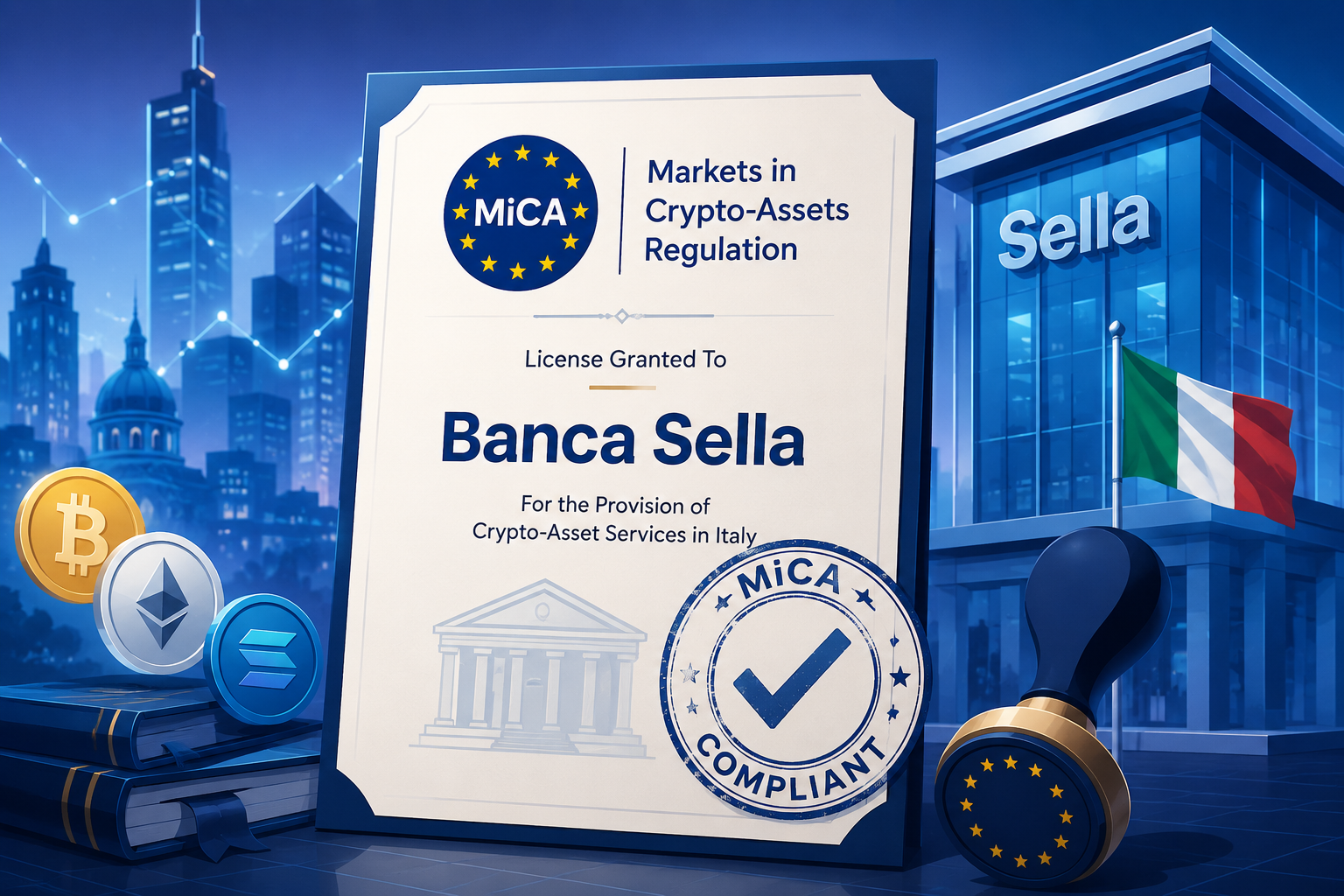
On May 27, 2026, Banca Sella completed its notification process with the Bank of Italy, making it the first Italian bank formally authorized to offer cryptocurrency services under the EU’s Markets in Crypto-Assets regulation.
Back in 2022, Banca Sella was already affiliated with the Bank of Italy's Fintech Milano Hub pilot program, specifically working on distributed ledger technology.
By July 2025, the bank was running a live internal crypto custody pilot using Fireblocks infrastructure, starting with a small group of employees holding digital assets including stablecoins, though it was custody only with no trading involved.
The bank's initial offering will center on custody, transfer, and receipt of digital assets specifically for selected corporate clients. As of now, it has not announced any retail trading features or any plans to let casual account holders buy Bitcoin through their banking app.
This is because their compliance framework leans on Chain analysis for blockchain intelligence and the internal infrastructure built during the Fireblocks pilot. These partnerships are what makes institutional-grade crypto custody work inside a regulated bank.
For banks, MiCA provides a straightforward process, they simply notify their regulator 40 days in advance, rather than going through the full licensing process required of non-bank crypto platforms. Banca Sella knowing this filed 40 days in advance and cleared the process without a full licensing review. That's the regulatory advantage traditional banks carry that crypto-native firms do not and it's accelerating how quickly European banks can now enter this space.
Then there's the Qivalis angle, which most coverage skim over. Banca Sella is a founding member of Qivalis, a consortium that now includes 37 European banks and among them are ING, UniCredit, CaixaBank, Danske Bank, and Raiffeisen Bank International. Qivalis, headquartered in Amsterdam and led by former Coinbase Germany CEO Jan-Oliver Sell, is building a MiCA-compliant euro-denominated stablecoin expected to launch in the second half of 2026, pending an e-money institution license from the Dutch central bank. The stablecoin is designed for programmable settlement, near-instant cross-border payments, and 24/7 operations. That's not a side project it is the next phase.
Banca Sella manages around €50 billion in assets and serves over 3.1 million customers. Italy's largest bank, Intesa Sanpaolo, now holds over €200 million in crypto on its own balance sheet. The direction the country's banking sector is moving isn't subtle anymore.
If timelines hold, Italian clients could be among the first in Europe to access a full suite of bank-operated digital asset services including a euro-pegged stablecoin under MiCA. That's not a small thing, as it shows the traditional banking infrastructure is slowly absorbing crypto from the inside out.