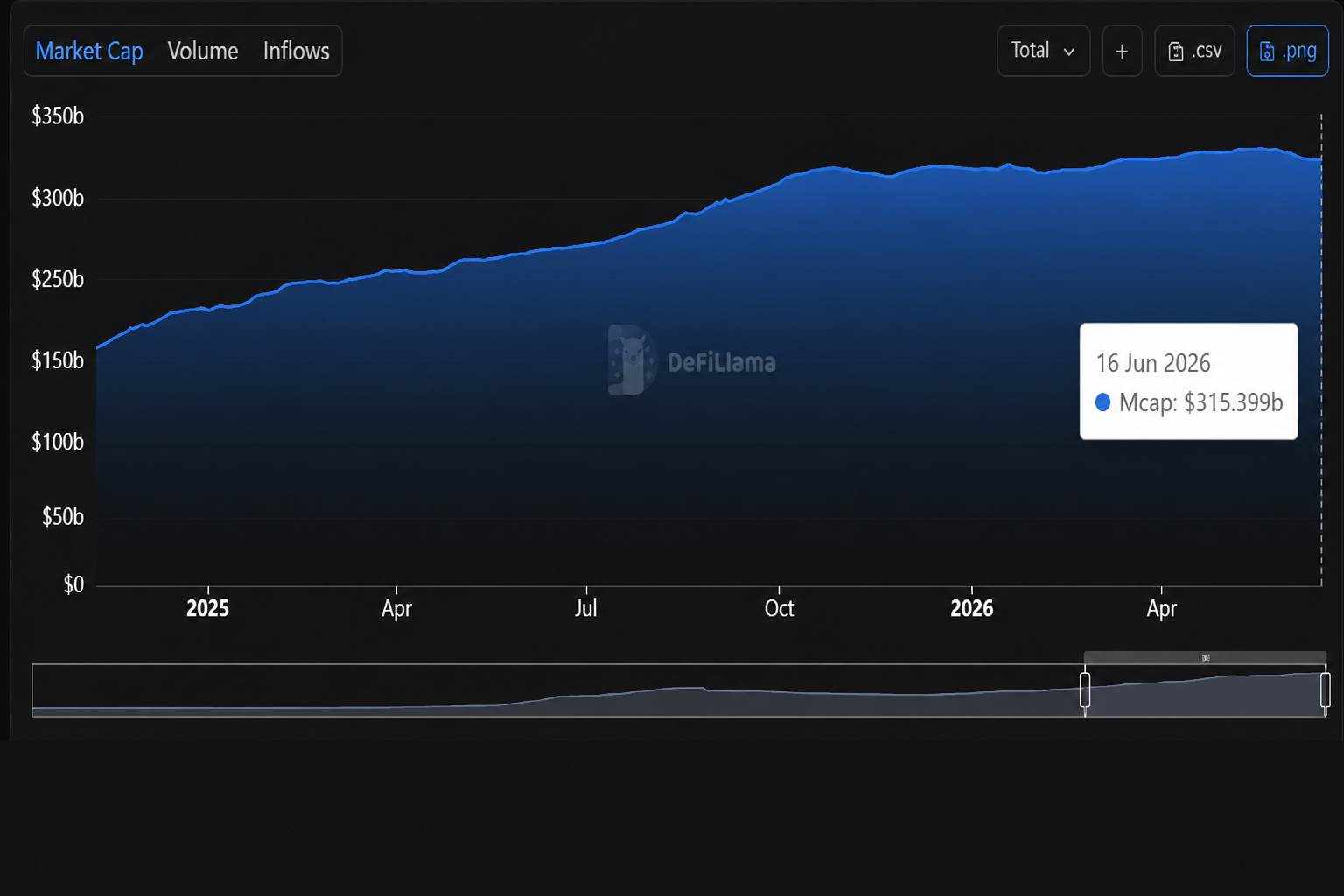
Stablecoin marketcap drop from $322 billion to $315 billion Source: DefiLlama
China’s central bank is paying closer attention to stablecoins as privately issued digital currencies begin to play a larger role in cross-border payments and global settlement channels.
The change mirrors growing concern in Beijing that dollar-linked tokens could influence capital flows and reshape parts of the international monetary system.
Wang Xin, director general of the Research Bureau at the People’s Bank of China (PBOC), said regulators need to closely monitor stablecoin development while strengthening any potential oversight and improving international coordination, according to a report by The Paper. He pointed specifically to the question of whether stablecoins will become more important in cross-border payments and how global regulators should respond in a coordinated way.
Wang also warned that rising uncertainty in digital payment systems could introduce new risks, including the potential “weaponization” of cross-border payment infrastructure. In his remarks, he did not give any hint to policy shift toward adoption, instead he reinforces a cautious, supervisory stance. He also noted that central bank digital currencies (CBDCs) should be assessed alongside stablecoins as competing instruments in the future payments landscape.
The comments come shortly after China expanded its regulatory stance toward digital assets. In February, multiple agencies, including the PBOC and other financial regulators, moved to reinforce restrictions on unauthorized issuance of yuan-pegged stablecoins and tokenized real-world assets, effectively tightening control over both domestic and offshore digital currency experiments tied to the renminbi.
Meanwhile, stablecoin activity continues to grow globally. Data from DefiLlama shows total stablecoin market capitalization hovering around the low $300 billion range, after peaking above it earlier in the year. Industry data from CEX.io estimates that stablecoin transaction volumes exceeded tens of trillions of dollars in recent quarters, though a significant share of this activity is attributed to automated trading and bot-driven flows.
A broader drawback is that Beijing’s stance on stablecoins remains cautious rather than reactive. While stablecoins are not formally accepted within China’s financial system, officials appear increasingly focused on how offshore dollar-backed tokens could influence settlement performance and monetary rank. At the same time, the development of CBDCs suggests a longer-term strategic contest over who controls cross-border payment infrastructure, with stablecoins now sitting directly in that middle ground.