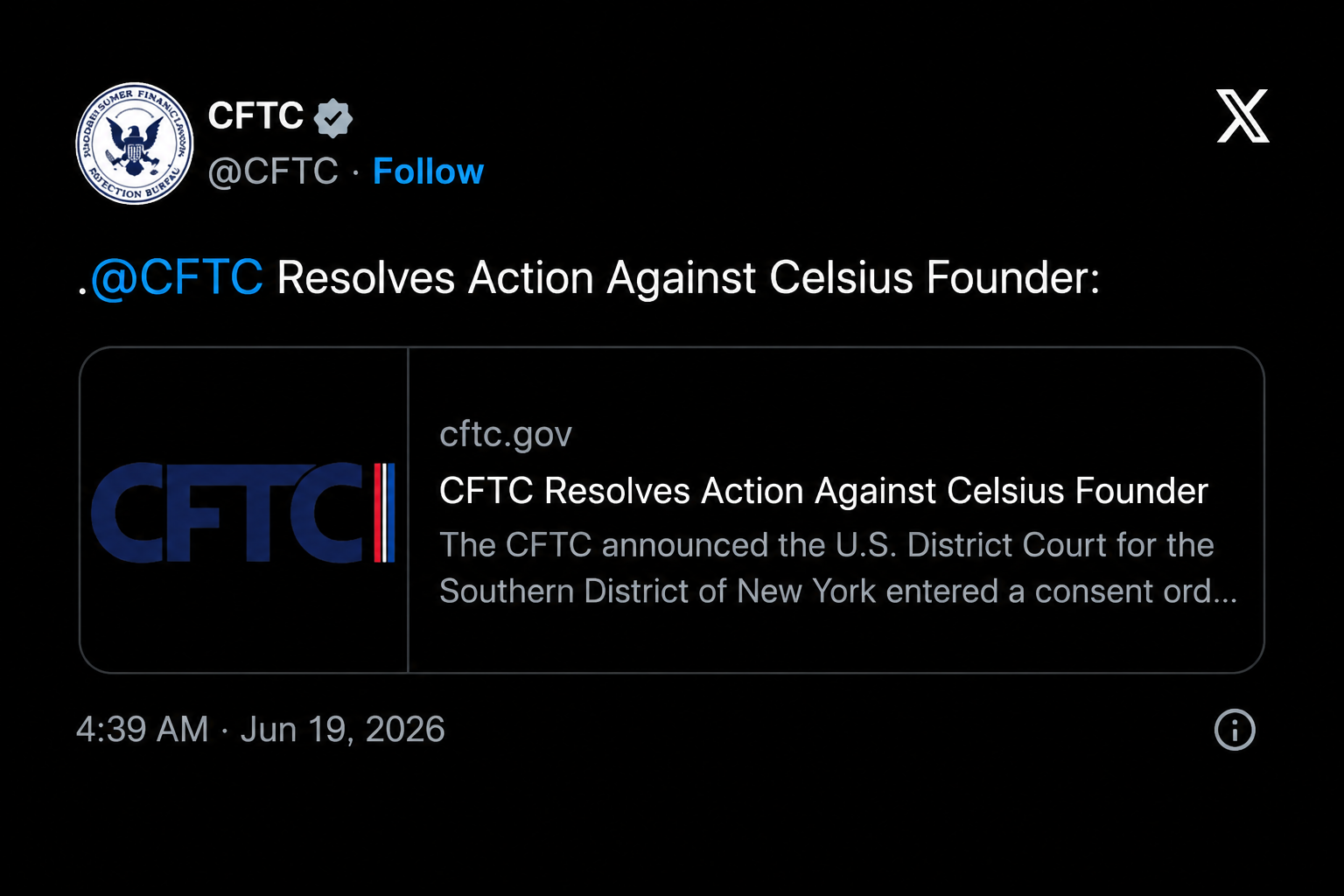
Source: CFTC
Former Celsius Network CEO Alex Mashinsky has been permanently barred from trading in markets regulated by the U.S. Commodity Futures Trading Commission (CFTC), closing one of the agency's final enforcement actions tied to the collapse of the crypto lending platform.
A federal court approved a consent order that permanently prohibits Mashinsky from trading commodity interests, futures, swaps and other derivatives overseen under the CFTC's regulation. The order also prevents him from registering with the regulator or participating in any CFTC-regulated business in the future.
The CFTC alleged that Mashinsky and Celsius misled hundreds of thousands of customers by portraying the platform as a safe, transparent and compliant place to earn yield on digital assets while concealing the risks behind its business model. According to the regulator, Celsius attracted roughly $20 billion in customer assets before its lending operations were revealed during the 2022 crypto market downturn.
The latest settlement adds to a growing list of penalties against Mashinsky following Celsius' collapse. In May 2025, he was sentenced to 12 years in federal prison after pleading guilty to securities and commodities fraud, admitting he deceived customers about the platform's financial health and manipulated the value of Celsius' native CEL token.
The CFTC's action follows a separate settlement with the Federal Trade Commission earlier this year that permanently banned Mashinsky from promoting or operating products involving customer assets, effectively ending any future role in the crypto or broader financial services industry.
The only major federal civil case still pending is the Securities and Exchange Commission's lawsuit filed in 2023. The SEC has told the court that settlement discussions remain ongoing, though no agreement has been finalized.
Beyond Mashinsky personally, the order marks a milestone for U.S. crypto enforcement. The Celsius case was the CFTC's first action against a digital asset lending platform, and its conclusion shows that regulators continue to pursue individual accountability long after bankrupt crypto firms cease operations. Legal observers say lifetime market bans are becoming an increasingly common remedy in cases involving fraud, ensuring executives cannot simply re-enter regulated financial markets after serving criminal sentences. While Celsius creditors continue recovering assets through the bankruptcy process, the CFTC's settlement effectively closes another chapter in one of crypto's most consequential enforcement cases, leaving the SEC litigation as the last significant regulatory hurdle facing Mashinsky.