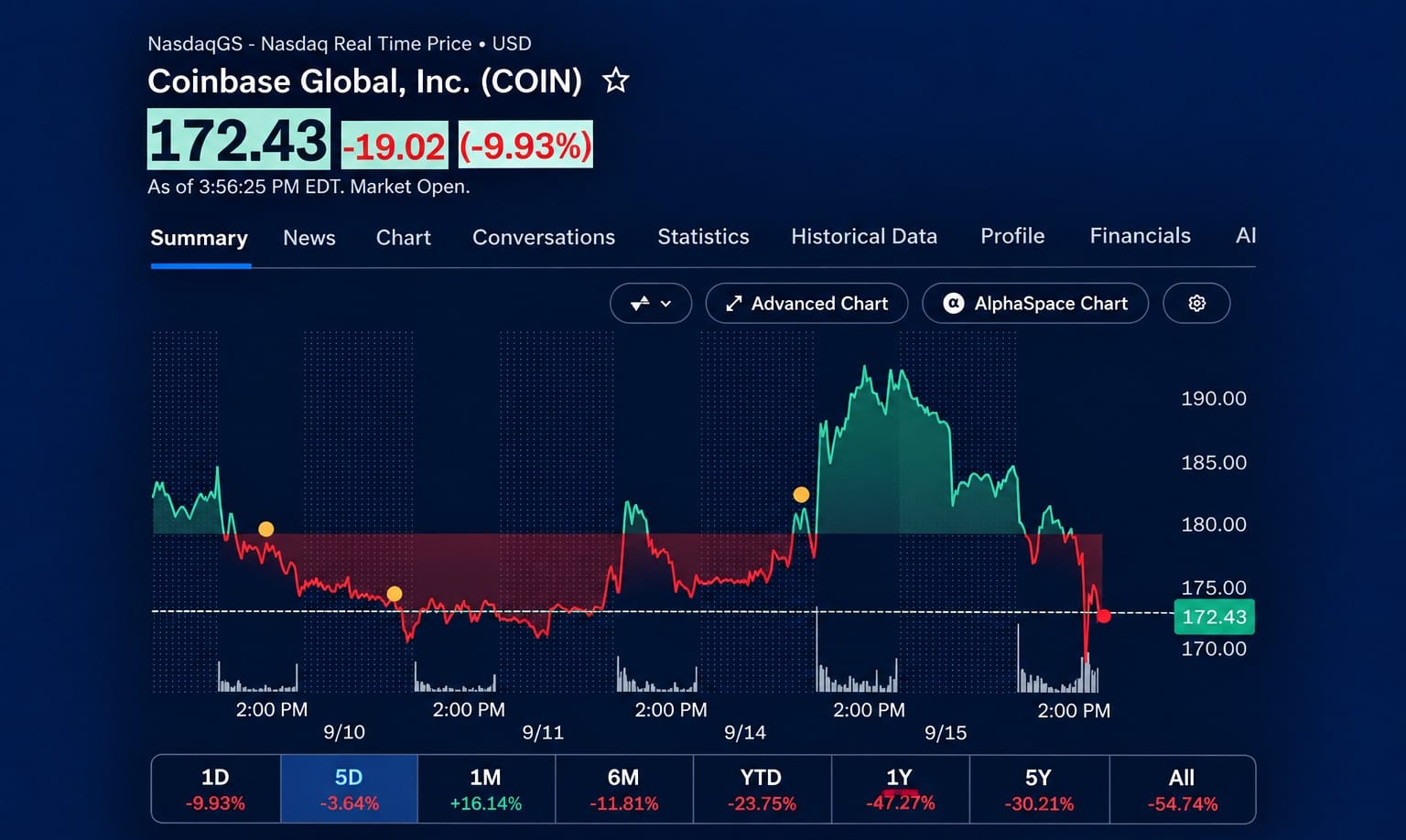
Coinbase (COIN) shares fell 9.9% on Tuesday. Source: Yahoo Finance
The shares of Circle and Coinbase fell about 10% as the failed Senate vote weighed on crypto-linked equities, with Bitcoin miners and treasury companies also declining. It ended in Fifty no’s, forty-nine yes, eleven short of the sixty CLARITY needed just to open floor debate, and by the closing bell Coinbase had given up about a tenth of its value, finishing near $172. Circle came off worse, down 11.5% to $86.25.
Following the vote, Bitcoin fell slightly under $76,000, a drop of roughly 4%, while the broad market barely twitched. Equities that are supposed to be levered to crypto fell two and a half times as hard as crypto itself did. Crypto stocks took the hit almost immediately. Apart from coinbase and circle, Galaxy Digital dropped about 8% and Gemini lost 7%. Robinhood was down around 3%. The miners weren't spared either, with Riot falling about 5% and several other major mining stocks down between 3% and 4%.
Some of that comes down to the bill itself. Going into the vote, traders had put the odds of a rate hike at 92%, the first one since 2023. The ten-year Treasury yield had already climbed above 5% that morning, something it hadn't done since 2007, with the Iran oil shock doing much of the work behind the scenes.
The awkward part is that hardly anyone was caught off guard. Polymarket had once put CLARITY at 82% back in February, only for those odds to get cut in half overnight to roughly 17%. Funding was basically flat, leverage wasn't particularly high, and there was no liquidation cascade to blame for the move.
Senator Thom Tillis reportedly voted yes, then flipped to no, because only a senator on the winning side can file a motion to reconsider. "This is not the end for the Clarity Act," he wrote on X afterwards. Whether anyone acts on that before the midterms is another question.
And it didn’t actually fall apart over market structure. Republicans put out a final version Sunday night that included 126 changes from Democrats. There was even a last-minute attempt to address rules around officials’ relatives, but that was rejected before the vote. Collins, Hawley and Moran ultimately voted no, while community banks were pushing back over the stablecoin yield provisions. In the end, the fight moved away from market structure and toward ethics and deposits.
So now the focus turns to the agencies. Selig already has CFTC staff working on a market structure framework using the authority they have today, while Regulation Crypto Assets has been open for public comment since August. Coinbase’s Faryar Shirzad described Tuesday as “a different type of clarity.” And, in a way, that makes sense. The problem is that an agency rule can change with the person running the agency. That uncertainty is exactly what investors still have to price in.