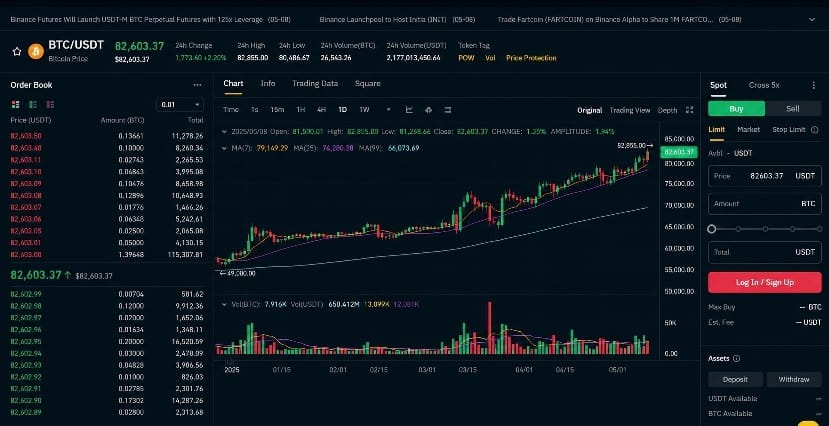
The Bitcoin's rally has moved back into institutional focus as spot ETF inflows increases alongside a breakout in price action that’s currently pushing the market into levels not seen since January.
Over the past session, U.S. spot Bitcoin ETFs recorded nearly $1 billion in net inflows, extending a Multi-day trend of renewed institutional and global demand. This inflow surge coincided with Bitcoin opening around $80,900 before pushing past $82,000 in early trading, marking its highest level and strongest price points since January, reinforcing the narrative that capital is now rotating back into crypto risk exposure after weeks of market suppression.
This all appears positive at first glance, but a closer look shows part of this rally is impacting a broader macro change, which is easing political tension particularly around the U.S and Iran ongoing situation, this has brought about reduction in oil prices and lifted risk appetite across markets and when economic pressure relaxes, liquidity tends to rotate back into high-beta assets, and Bitcoin is usually first in line.
Market participants are assessing whether this move represents a brief recovery or the early stages of a sustained bullish cycle especially given the familiar structure of the rally.
Historically, rallies built on leverage tend to be fragile. They move quickly, look impressive, and attract attention but once positions start unwinding, the decline can be just as quick. This reflects positioning pressure rather than organic demand and sustained buying interest.
Analysts at CryptoQuant have pointed to the possibility that a significant portion of April's roughly 12.7% Bitcoin advance was driven less by sustained spot accumulation and more by leveraged activity in derivatives markets. In other words, futures and positioning may have played an outsized role in pushing price higher, rather than organic long-term buying from spot investors alone.
Now there are two real-time observations colliding, ETF inflows signaling long-term confidence and Leverage-driven momentum signaling short-term instability. That's the tension holding the rally together and why the increase feels both bullish and bearish all at once.
If spot demand starts to catch up with real buyers absorbing supply without relying on leverage, this move could stabilize and extend, but if the market remains propped up by derivatives then this becomes just another short-lived, leverage-driven rally with limited durability.