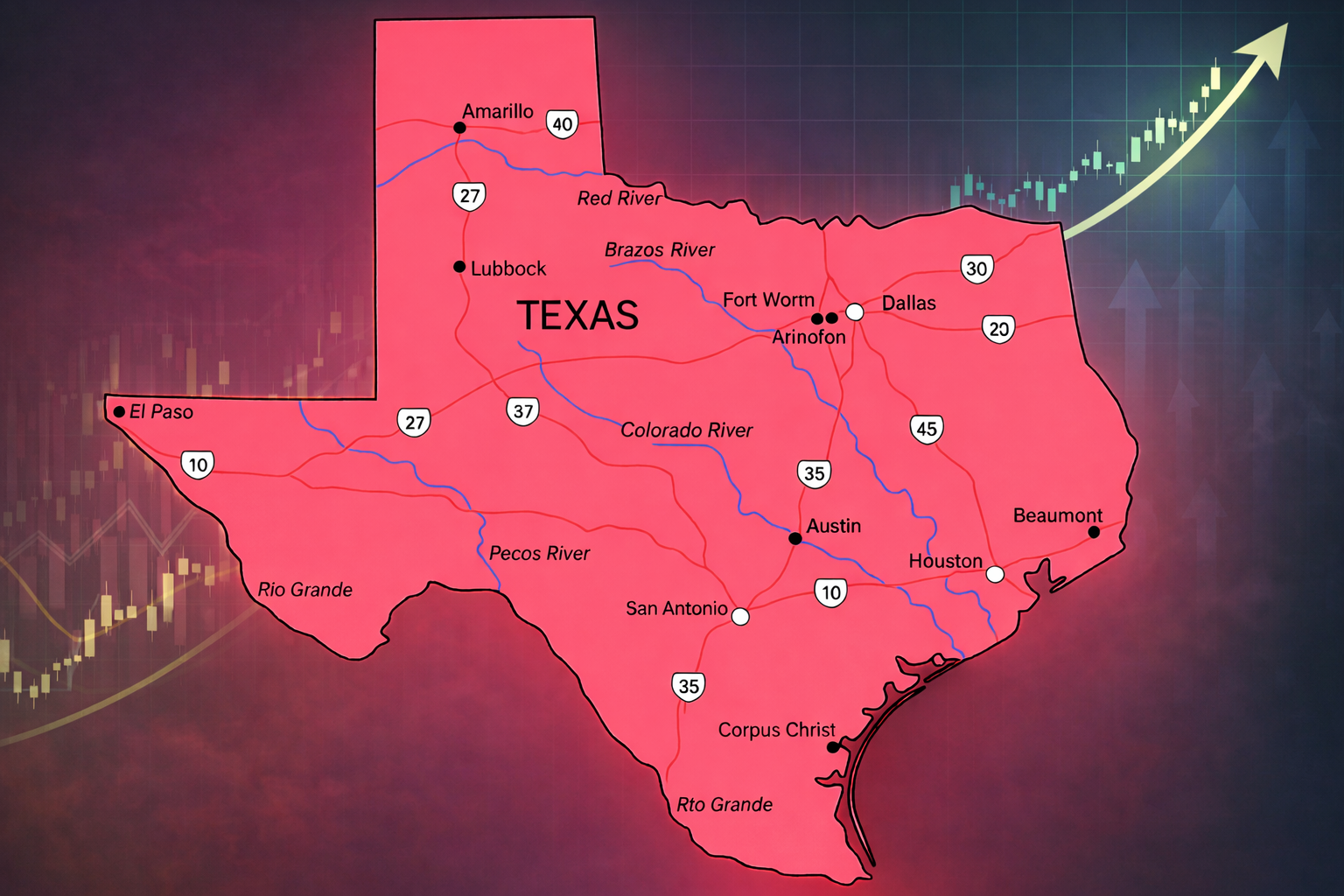
On the morning of November 20, 2025, a state government employee at the Texas Comptroller's office executed a trade through the BlackRock’s iShares Bitcoin Trust ETF at a per share price of $51.56, with Bitcoin trading at $91,336 per coin. The purchase which was approximately $5 million worth of IBIT shares was described internally as a ‘palaceholder’ investment while the state worked to contract a qualified cryptocurrency custodian.
For people who witnessed the transaction on screen, it seemed like any other institutional ETF order but it was the first time in U.S history that a state had deployed public funds into a Bitcoin reserve and the Texas Legislature passed the mandate to make it happen.
Because the purchase was made through an open-market digital acquisition rather than an allocated pension fund, the move immediately sparked widespread debate. Critics argued that the strategic digital asset purchases should fall under federal authority. However, the Texas government had full legislative backing and ultimately became the first U.S state even ahead of the federal government to execute such a move.
The decision quickly prompted responses from other states, effectively igniting what many observers have begun calling a state-level Bitcoin Race. And as of early 2026, over 20 states have either passed laws, advanced bills through committee, or introduced legislation to put digital assets on their public balance sheets. The results have been unprecedented, raising important questions about what this competition could mean for the future of Bitcoin, state finances and the broader digital asset market which would be duly explained in this article.
THE FIRST STATE TO LEGALIZE A BITCOIN RESERVE
The first state to enact a strategic Bitcoin reserve law was Concord, New Hampshire. On May 6, 2025, Governor Kelly Ayotte signed House Bill 302 into law, making New Hampshire the first state in the US history with legal footing to create a strategic Bitcoin reserve. The law authorizes the state treasurer to invest up to 5% of New Hampshire’s total public funds in digital assets or precious metals with specific conditions attached. To qualify, a digital asset must have maintained a market capitalization of over $500 billion for the previous 12 months, a threshold that, at the time of signing, only Bitcoin met.

The design of that threshold was rather deliberate because rather than naming Bitcoin directly in the legislation which would have raised legal and political complications, the bill defined a market cap floor that effectively hinted at Bitcoin without saying so, which made it defensible as policy writing goes.
Unlike the Federal Strategic Bitcoin Reserve, which is restricted to seized assets, New Hampshire’s law explicitly allows the state to purchase Bitcoin through public funds, a meaningful distinction that gives the state treasurer a powerful stand to build a position over time. The law also permits holding through regulatory ETF products or through qualified custodians, giving the state flexibility on how to hold the asset.
As of early 2026, New Hampshire has not yet made a purchase. Though the authority exists and the infrastructure surrounding it is being built, the state that got there first legislatively has been cautious about initiating a purchase in deliberate contrast to what Texas did next.
THE FIRST STATE TO BUY BITCOIN
On June 20, 2025, Texas Governor Greg Abbott signed Senate Bill 21 into law, establishing the Texas Strategic Bitcoin Reserve and Investment Act, a bipartisan bill that took effect approximately 60 days after the bill was passed. The legislation authorized the state comptroller to acquire, manage and hold Bitcoin and other cryptocurrencies with market capitalization of at least $500 billion over a 24-month period, Texas created a dedicated reserve fund held outside of the state Treasury, and established a Strategic Bitcoin Reserve Advisory Committee to oversee the allocation and reporting of holdings.

Texas legislators appropriated $10 million to seed the reserve. The state's first purchase came on the morning of November 20, 2025, when acting Comptroller Kelly Hancock's office bought approximately $5 million worth of Bitcoin through BlackRock's iShares Bitcoin Trust ETF ticker IBIT at a price of $91,336 per coin.
The decision to buy through an ETF rather than holding Bitcoin directly was a deliberate one as The initial purchase was structured as a temporary placeholder investment while the comptroller’s office worked to finalize an operational framework for managing the reserve. By using a regulated investment vehicle, BlackRock. Texas was able to execute its first allocation under existing securities law and infrastructure while the state worked toward building its own qualified custodian framework and portfolio management arrangements required under SB21.
Acting Comptroller Kelly Hancock described the purchase plainly: “The Texas Legislature passed a bold mandate to create the nation's first Strategic Bitcoin Reserve. Our goal for implementation is simple: build a secure reserve that strengthens the state's balance sheet. Texas is leading the way once again, and we're proud to do it."
Not everyone agreed. State Senator Molly Cook, a democrat from Houston who voted against the reserve fund, called the move “gambling our money on something that is known to be widely volatile and has not shown to be the tide that raises all boats.” University of Houston energy economist Ed Hirs pointed to Bitcoin's volatility as a structural problem arguing it made the asset a poor investment of taxpayer dollars compared to conventional stock and bond allocations.
The concerns were said to be legitimate and worth taking seriously. But the purchase happened regardless and in doing so, Texas crossed a line no state has crossed before. But reportedly that wasn't the final act Texas would carry out towards this new improvement.
A separate reported proposal has circulated that State Representative Giovanni Caprigiione filed a new legislation, on January 12, 2026 The Texas Digital Asset Expansion Act aimed at lowering the market cap threshold from $500 billion over 24 months to $250 billion over 12 months. Though the news has not been confirmed in the official legislative records, the change would open the door for Ethereum and potentially Solana to enter the state reserve alongside Bitcoin. This could allow the ‘Bitcoin-only’ era of state reserve policy to give way for a broader multi-asset approach in Texas.
ARIZONA CHOSE A RESERVE PATH WITHOUT TREASURY BUY
The Texas move quickly increased interest in similar policies across the country. But Arizona's experience shows how politically difficult these proposals can get even in states widely viewed as friendly to cryptocurrency.
Arizona's legislative push towards a Bitcoin reserve has been largely defined by near-misses. In 2025, Governor Katie Hobbs officially rejected Senate Bill 1025, a legislation that would have allowed state treasuries and the public retirement system to allocate up to 10% of certain state funds into digital assets. When asked about the reason for her conclusion, Hobbs argued that exposing retirement assets to what she described as “untested investments” was inappropriate for Arizona’s pension system.
She also rejected the House Bill 2324, which proposed establishing a Bitcoin reserve funded through seized digital assets. Hobbs warned that the structure if the bill could create unintended incentives around digital asset forfeiture and complicate coordination between state and local.law enforcement.
On May 7, 2025, Hobbs later signed House Bill 2749, a legislation that updated Arizona's unclaimed property framework to recognize digital assets. Instead of forcing immediate liquidation of seized or abandoned cryptocurrency, the law allows the state to hold digital assets in their native form.
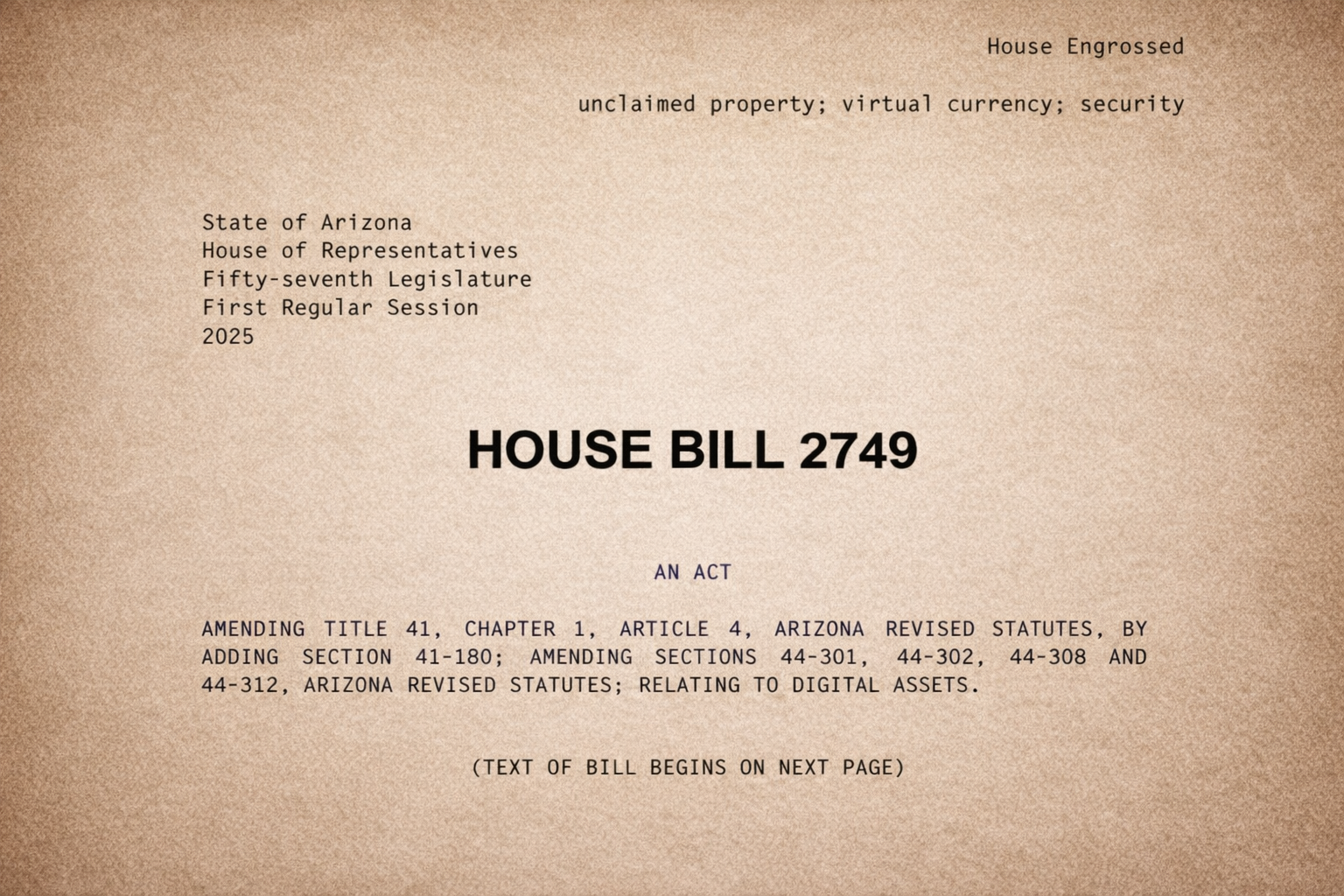
While HB 2749 does not support the creation of a formal Bitcoin reserve, it establishes a legal pathway for Arizona to retain cryptocurrency obtained through enforcement actions or unclaimed property, which lays the groundwork for future reserve policies without committing public funds to open-market purchases.
The gap between the two positions of a reserve pathway and purchasing authority reflects the political reality in different states and how they view Bitcoin's role in public finance.
WHY FLORIDA, WYOMING, MONTANA AND PENNSYLVANIA STALLED
The pace of state-level legislation in 2025 was significant enough that a dedicated tracking site was built to specifically monitor it. States that have passed the reserve-related or custody legislation includes New Hampshire and Texas. States where bills are working through committee include Alabama, Florida, Georgia, Idaho, Illinois, Kansas, Kentucky, Maine, Maryland, Michigan, Missouri, New Mexico, North Carolina, Ohio, Oklahoma, Rhode Island, and West Virginia. where digital asset treasury policies have been introduced or remain under legislative consideration.
The states that didn't make it are equally instructive. Florida, once considered as one of the potential early adopters, indefinitely postponed its bill after political and fiscal concerns surfaced. Even Wyoming, the home state of Senator Cynthia Lummis herself, one of the most prominent advocates for a federal Bitcoin reserve voted the bill down in committee with only few lawmakers supporting it. Other states including Montana and Pennsylvania both failed to advance their legislation.
The difference in outcomes across the states simply implies that while interest in state-level Bitcoin reserves is growing rapidly, political consensus around how governments should interact with digital assets remains far from settled as most states figure it'll be hard to convince a pension holder that their retirement allocation has gone into Bitcoin funding.
WHAT STATE BITCOIN BUYING COULD DO TO SUPPLY, PRICE AND POLICY
With Bitcoin's total supply permanently capped at 21 million coins, accumulation by multiple state governments would reduce circulating availability and contribute to a supply shock dynamic, because as official reserve increases, the asset could experience reduced volatility over time which can increase the demand and value of Bitcoin to even greater heights and greater integration into regulated financial infrastructure.
States budgets are comparable in scale to many large institutional investors meaning that when states are authorized and willing to allocate even a small percentage of their fund to Bitcoin, they bring sustained capital to bear. Though the effect on price won't be immediate but over the long term, having multiple sovereign corporations and entities competing for a fixed supply of assets changes the structural demand in ways that would prove difficult to reverse.
Christian Catalini, founder of the MIT Cryptoeconomics Lab, framed Texas's move as more than just a treasury decision: "Once you've made that bet on infrastructure and industry, adding some Bitcoin exposure at the treasury level is a natural next step. It essentially makes the state's balance sheet one that is explicitly aligned with the ecosystem it aims to attract.”
Also, states competing to position themselves as crypto friendly jurisdictions would attract businesses, talents and investments which would end up being as important as the Bitcoin purchases themselves.
WHAT HAPPENS NEXT?
What is already established is that the movement has crossed the threshold from legislative speculation to a funded reality. Texas is now a legal and official holder of Bitcoin. New Hampshire has the legal authority to follow. Arizona has a reserve pathway and over. 20 states are watching. The federal government declared a Strategic Bitcoin Reserve and is still working through the legal means to fully implement it. Meanwhile the state level is already on the run. In our next article, we will be breaking down the GENIUS Act, what stablecoin regulation has changed, and why the legislation that just reshaped how banks can interact with digital money may matter and affect the average person using StableCoins.