On the morning of March 17, 2026, Mastercard announced its acquisition of BVNK, a London based stablecoin infrastructure firm, in a deal reportedly valued at up to $1.8 billion. By that same afternoon, PayPal extended its dollar backed stablecoin PYUSD, to users across 70 countries, up from just two countries.
This happened on the same day, with similar industries walking in the same direction. Two of the most recognized payment companies in the world are moving deeper into stablecoin economy. If there's a moment you could point out where stablecoins stopped being a crypto-native experiment and started looking like a part of mainstream payment, March 17 makes a strong contender.
BVNK The Start-up Coinbase Almost Bought
Before Mastercard became a contender for the acquisition of BVNK, there was Coinbase. In October 2025, Coinbase entered exclusive talks to acquire BVNK, a London based stablecoin infrastructure firm reportedly valued at around $2 billion, a deal that would have nearly doubled what Stripe paid to acquire Bridge, the stablecoin start-up earlier that year. The discussions moved through due diligence, and for a while the deal looked promising. Then in November, both companies walked away without disclosing the reason, ending what could have been one of the largest acquisitions in the stablecoin market.
But BVNK didn't stay available for too long, as four months later Mastercard stepped in, announcing plans to acquire the company in a deal reportedly worth up to $1.8 billion, including performance-based payouts. The transaction is expected to close at year end pending regulatory approval but what exactly is BVNK? And why does it seem hot on the shelf? BVNK builds the infrastructure that connects traditional payment systems with blockchain-based transactions. In practical terms, it allows businesses to move money across more than 130 countries in seconds using stablecoins, without losing compatibility with existing financial rails. Its infrastructure used by firms, including Worldpay,Deel, Flywire processes up to $30 billion annually. Founded in 2021 by Jesse Hemson-Struthers, it has positioned itself as one of the few firms offering stablecoin infrastructure at an enterprise level and not just for crypto-native companies, but for businesses that need compliance, reporting and integration with traditional finance built from the start.
The first piece, compliance is what makes the company particularly relevant right now. Because for years, Stablecoin moved ahead of regulation. Now regulation is starting to catch up. And the companies that already built within these constraints are the ones large payment firms are willing to acquire.
Acquiring BVNK Adds Speed And Programmability Says Mastercard's CPO
The acquisition of BVNK gives Mastercard the world's second-largest payment network after Visa and a way to connect its existing features with blockchain-based systems.
Since Mastercard was initially built for an earlier era, though it is fast, widely trusted and used at a global scale, adopting stablecoins gives it an edge amidst its advantages because stablecoins operate differently, run continuously, settle quickly and reduces the cost of moving money across borders and this deal was the bridge between the two systems.
Analysts see it as a way for Mastercard to integrate stablecoin rails into its network without disrupting its core business, treating it as an extension. As Mizuho’s Dan Dolev put it, stablecoins are becoming part of future payments, and William Blair made a similar point, noting that the real opportunity is in cross-border and business-to-business flows, rather than everyday consumer payments where cards already dominate.
John Lambert, Mastercard’s Chief Products Officer, framed the acquisition as “Adding on-chain rails to our network will support speed and programmability for virtually any type of transaction.” What the acquisition states plainly enough is that Mastercard believes stablecoin infrastructure is worth owning before it becomes unavoidable.
PayPal's Extension Brings Faster Settlement And Lower Traffic Says Crypto Lead
On the same day Mastercard made headlines with the acquisition, PayPal expanded PYUSD across 70 markets worldwide, before then access had been limited to mainly the U.S and U.K the rollout now spans regions across Asia-Pacific, Europe, Latin-America, and parts of Africa. Users in these markets can buy, hold, send, and receive PYUSD directly through their PayPal accounts, with the option to move funds to external wallets or even convert to local currency. For merchants, the difference is more immediate as funds can now settle in minutes rather than days.
Cross-border payments have always been one of the slowest and most expensive parts of the system. Waiting several business days for settlement, while absorbing meaningful fees, has been standard for decades. Stablecoins has now turned the tide.
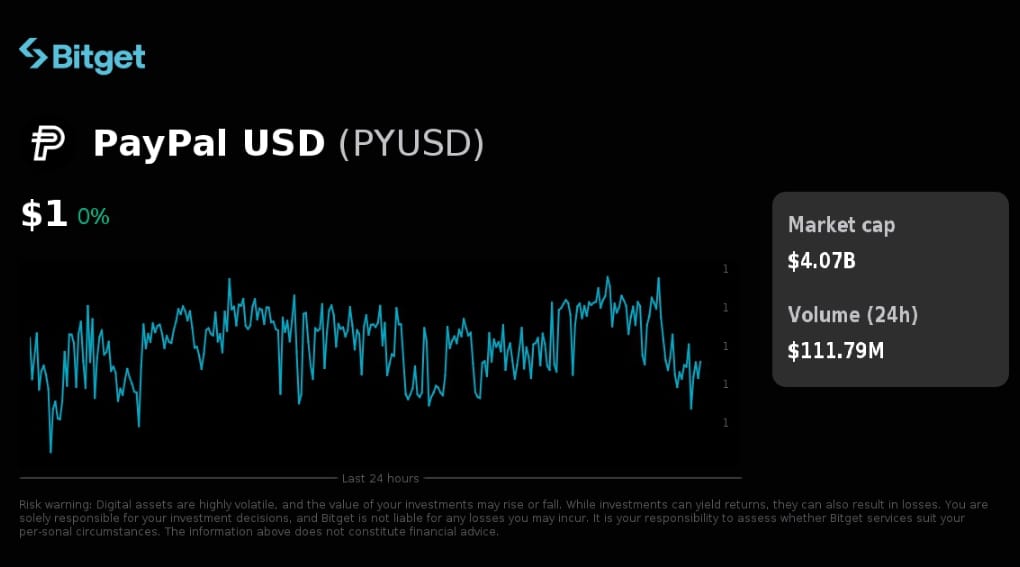
PayPal's crypto lead, May Zabaneh, framed the expansion around access and efficiency particularly in regions where delays and cost are most obvious. The underlying point is straightforward: ‘faster settlement and lower traffic tend to drive volume.’ PYUSD still sits well behind the largest stablecoins holding a market cap of $4.1 billion, trailing lead coins like USDT and USDC. But moving from a limited rollout to broad international availability is the kind of distribution that can change how quickly a product grows.
What This Means For The Stablecoin Market
The advancement from the two payment companies came at the end of a 12-month stretch where stablecoins moved from regulatory uncertainty to a more defined framework. In mid-2025, U.S policymakers introduced legislation aimed at setting clearer rules for stablecoin issuers, outlining how banks and non-banks could operate within a complaint structure and that kind of clarity was what the market had been waiting for.
Moves like Mastercard push into infrastructure, PayPal's global expansion of PYUSD, and Stripe's acquisition of Bridge weren't just random situations. They happened once there was enough regulatory footing to support them. At the same time, the scale of the market has become harder to ignore, Stablecoin supply has grown into hundred of billions, and the volume moving through this network has reached levels that put them alongside traditional payment systems in certain segments and what was once seen as a crypto niche is now starting to look more like a layer of financial Infrastructure.
This shows that the payment industry and infrastructures as a whole believes the next decade is headed with digital currency, and with market views and analysis it looks promising.
What Comes Next?
The Mastercard deal still needs regulatory approval and it is expected to conclude before the year ends. Integrating BVNK’s infrastructure into Mastercard's network won't be immediate and will be reviewed across multiple jurisdictions. PayPal's rollout, by contrast, is already live. The question now is whether PYUSD can grow beyond its current scale in markets where USDT is deeply entrenched and USDC carries institutional trust. PayPal has distribution but turning that into liquidity and everyday usage is a different challenge.
What is already settled is the direction, two largest payment networks that are not Visa both made their most significant stablecoin moves on the same day, showing that the stablecoin infrastructure race is now more than just a crypto story.
Delogg Media