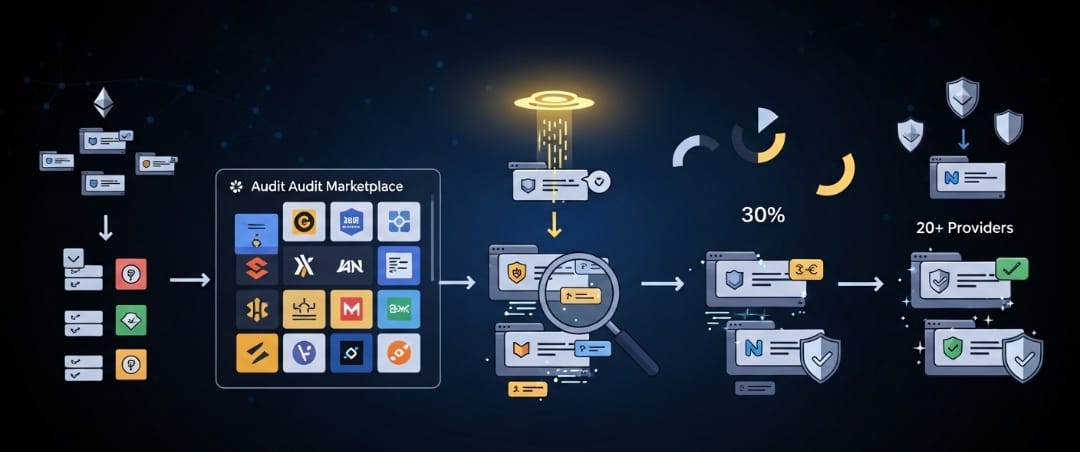
The Ethereum Foundation on Tuesday launched a $1 million Audit Subsidy Program to help builders manage the high cost of smart contract security audits, a key blockade to safer development.
The initiative, backed by Nether mind and Chain link Labs, will cover up to 30% of audit Costs for Ethereum mainnet teams, on a first-come first-served basis.
The move which the foundation is framing as part of its broader “Trillion Dollar Security” initiative, addresses one of the most persistent pain points in crypto development which is the steep price of professional code reviews that many smaller teams simply cannot afford.
The program is a joint effort between the Ethereum Foundation's Trillion Dollar Security Initiative, Areta, Nethermind, and Chainlink Labs. More than 20 audit firms have signed on as participating providers through the Areta marketplace, including Certora, Zellic, and Immunefi.
Eligible teams can receive financial support covering up to 30% of total audit costs, with higher support available for selected projects on a case-by-case basis. All Ethereum mainnet builders are eligible to apply, regardless of project size or stage.
The foundation also said the program will give developers access to more than 20 audit providers who will check code for errors or security risks before deployment. The program prioritizes teams aligned with the Foundation's CROPS principles, an acronym covering censorship resistance, open source, privacy, and security embedded in its March 2026 mandate.
No fixed deadline has been set for applications. Subsidies are distributed on a first-come basis until the $1 million pool is exhausted.
The timing is notable. The program's launch came on the same day CoW Swap suffered a DNS hijacking attack that exposed users to a malicious front-end, underscoring the real costs of inadequate security review across the DeFi ecosystem.
The Foundation also partnered with Morpho in March 2026 to increase its involvement in decentralized finance by allocating additional ETH to the platform, and in February introduced Project Odin, a program aimed at supporting teams that build core infrastructure tools.
Taken together, the moves implies a more hands-on commitment from the Foundation, one that's increasingly willing to deploy capital, in the fight to make Ethereum's builder ecosystem more secure before code ever reaches mainnet.